We are a charityentirely runfor and by Autistic adults without intellectual disabilties
We’ve struggled with getting our language right to fully explain who our beneficiaries (the people we support) are.
Asperger’s Syndrome is no longer a diagnosis (but we respect those who were diagnosed with the condition using the term) and we don’t believe, as an organisation, that “functioning” labels are helpful to anyone.
So until we find something more fitting, we describe our beneficiaries as “Autistic without intellectual disabilities” which still isn’t perfect especially as people confuse intellectual/learning disabilities with learning difficulties.
Over the years the misconceptions around Autism have led people to believe that all Autistic people are intellectually disabled, but this is a misconception.
The diagnostic criteria for Autism Spectrum Conditions clearly states that the two often co-occur, but that it is not an assessed trait.
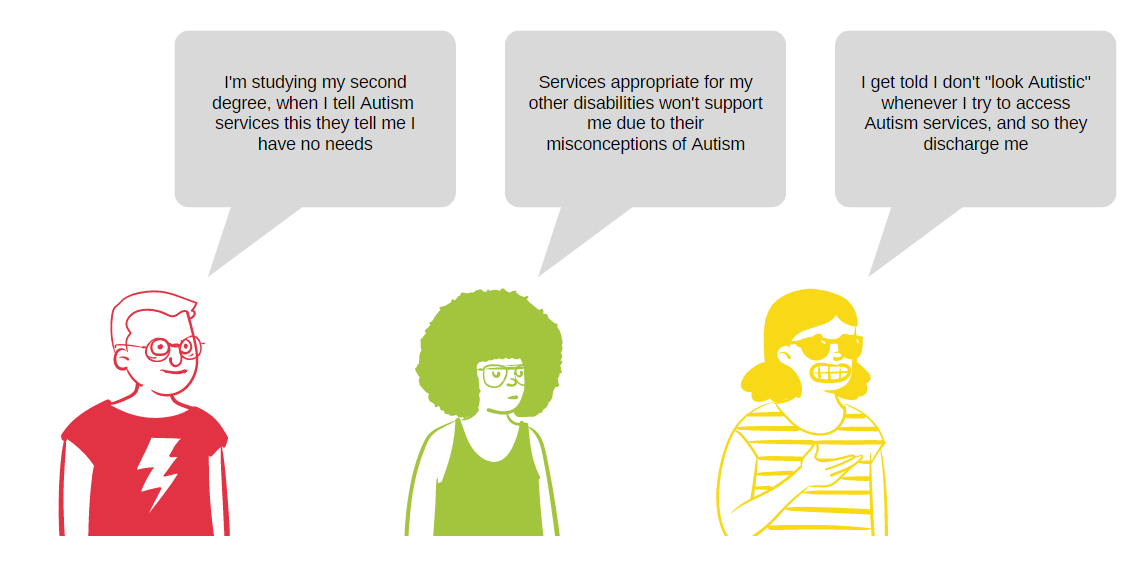
Sadly, this widespread misconception has led to autism services focusing on people with intellectual disabilities, leaving no appropriate services for Autistic adults who have less obvious needs.
As a charity, we work to fill that gap and engage Autistic people who do not have a place in other autism services.
Autismis nota learning disability
So what couldour beneficarieslook like?
InSummary
We are working hard to fill a gap in provision that is causing many Autistic people to be left unsupported, especially those with a late diagnosis. We work hard to engage with other organisations in the local area to ensure that if we can’t support someone, we can get them signposted and led to somewhere that can